index




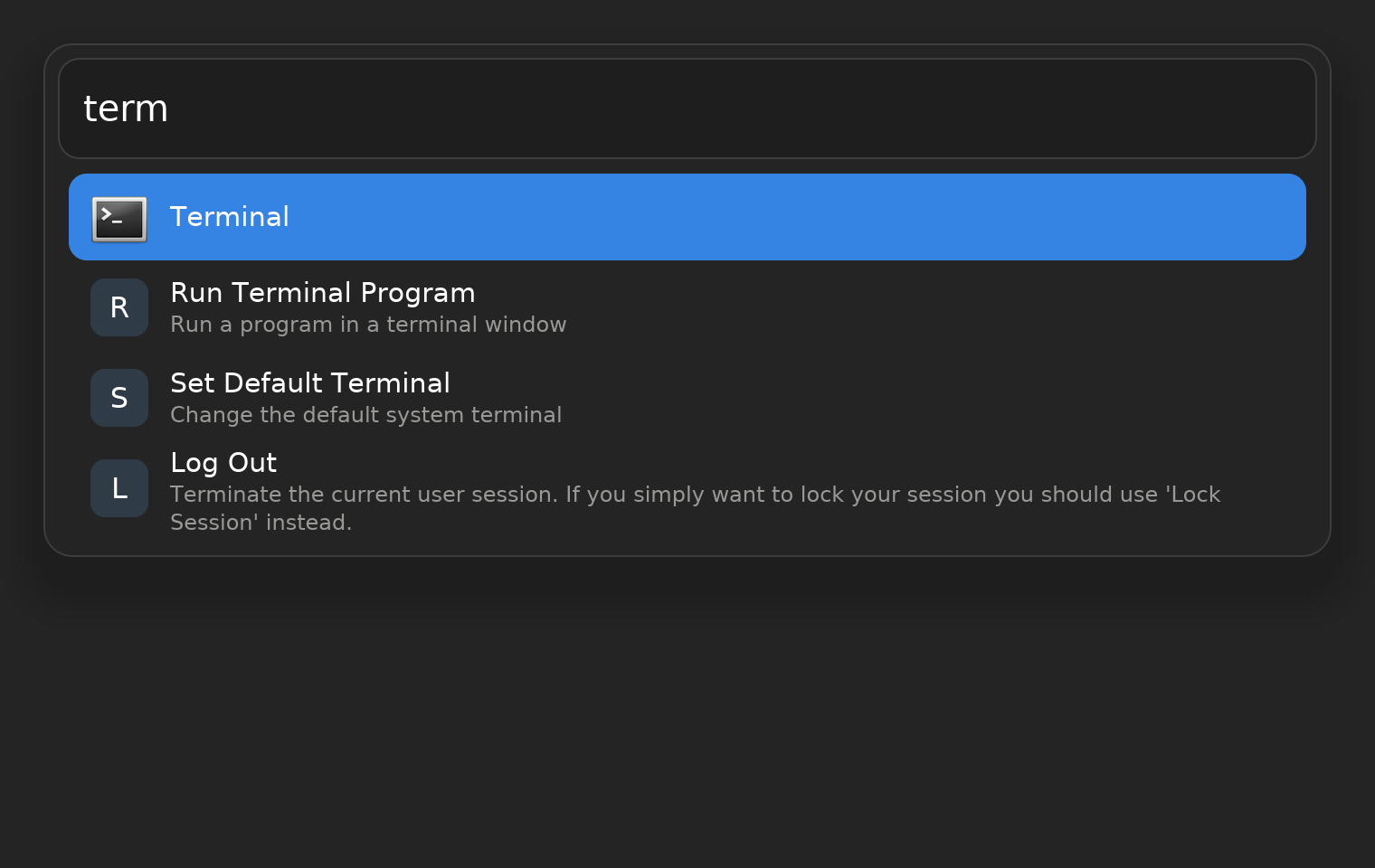
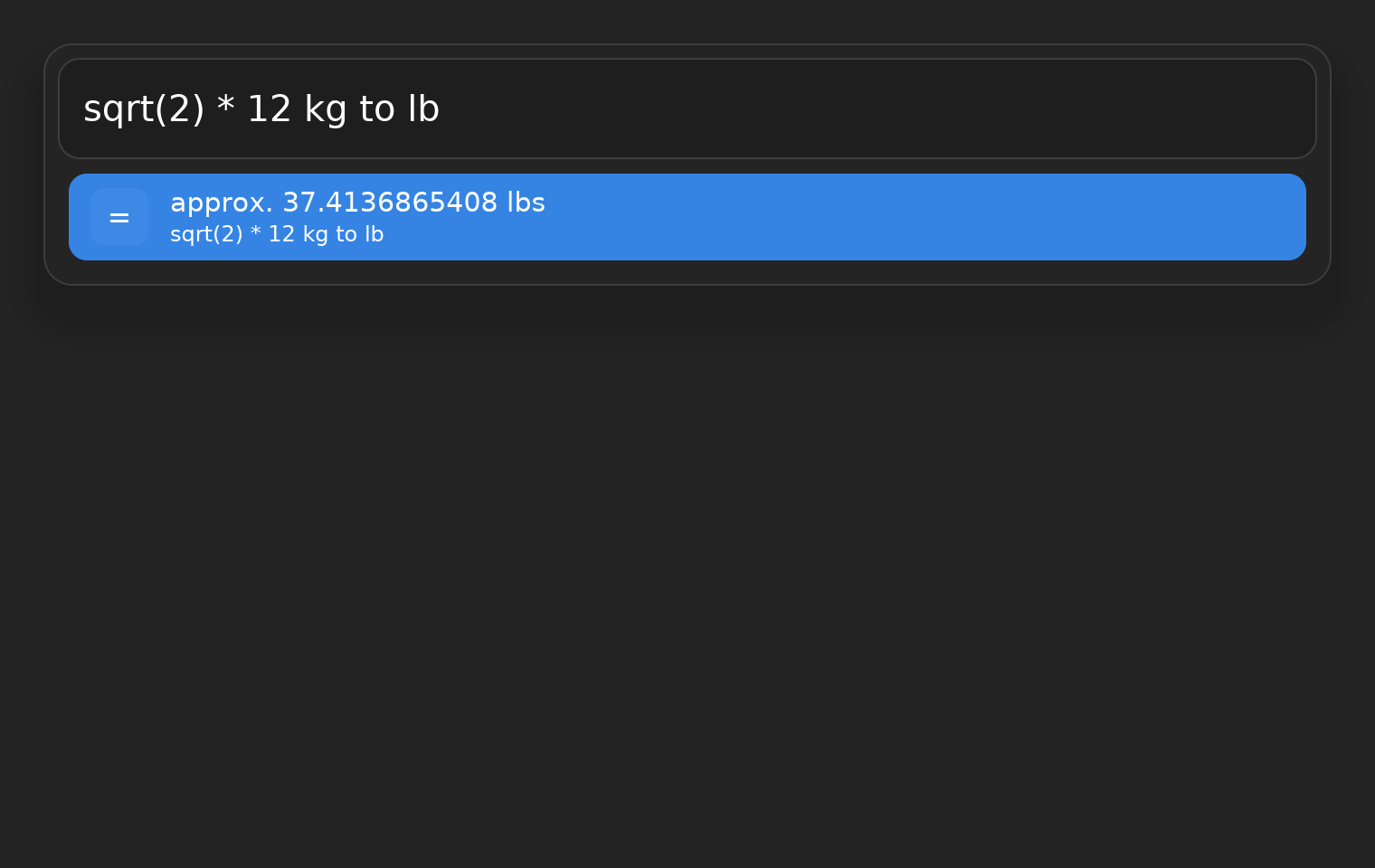
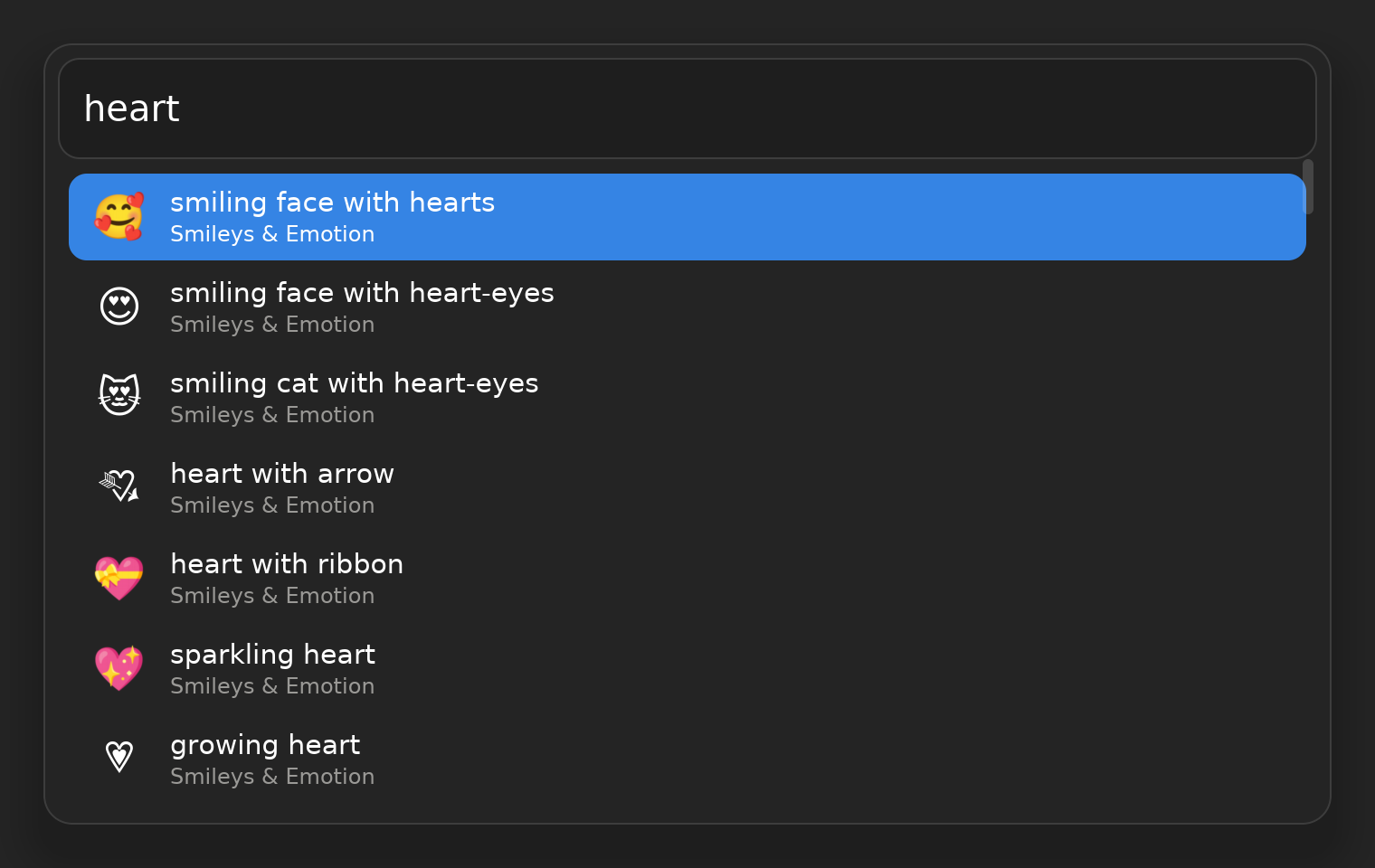
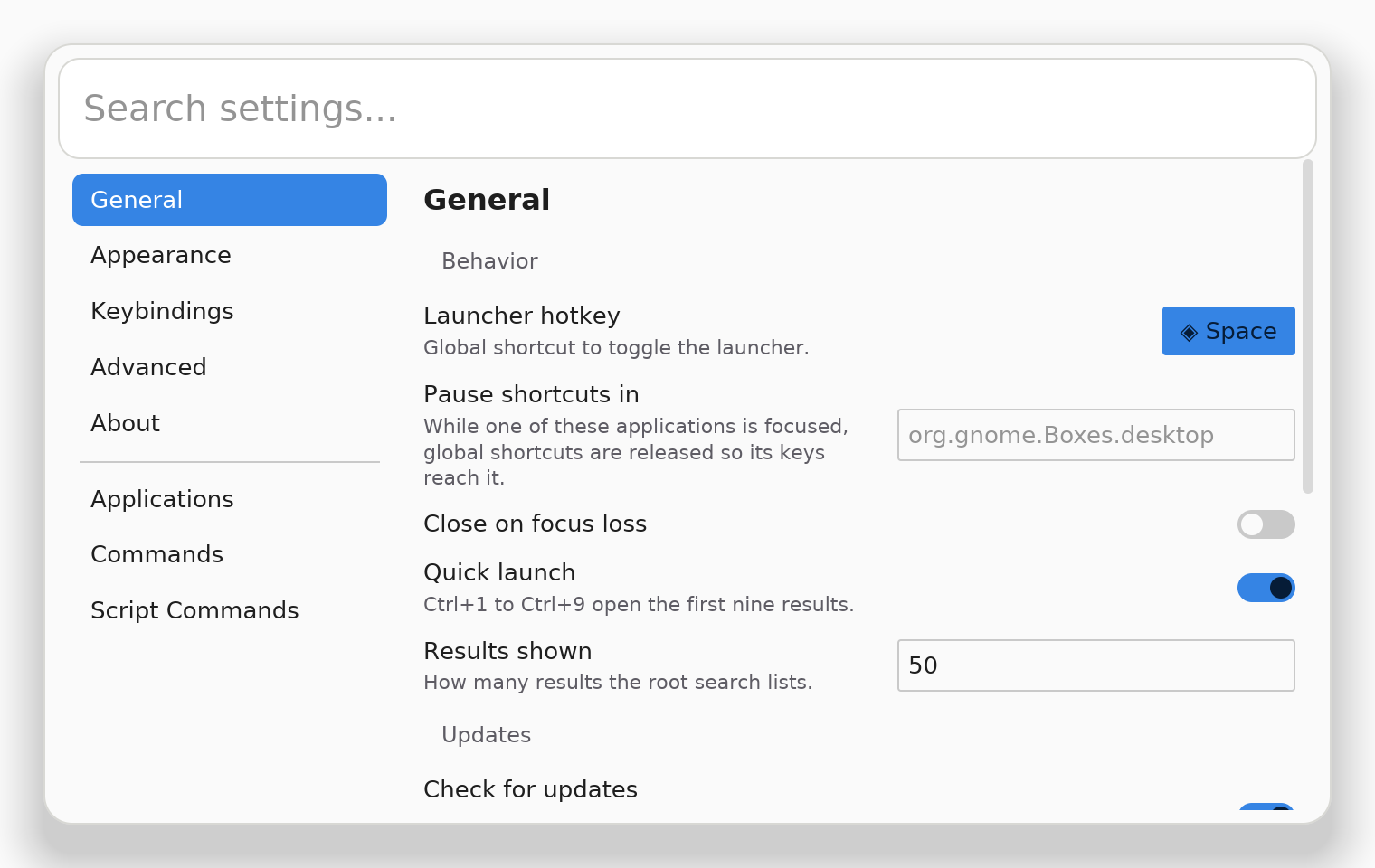
Compass puts applications, commands, clipboard history, snippets, files, a calculator, emoji, windows and extensions behind one search field. Press a key, type a few letters and press Enter.
It started as a hard fork of Vicinae. The engine and the UI have been rewritten in Rust, with an Iced interface in place of C++ and Qt.
 |  |
 |
Why Compass over Vicinae
It starts sooner and uses less memory. Both launchers were measured by the same script on the same machine, cold-starting against the same 738-application index on a headless Wayland compositor. The table shows medians of five runs each. The method, the raw data and the one-line command to reproduce it are in BENCHMARKS.md.
| Compass | Vicinae 0.29.0 | |
|---|---|---|
| Engine ready to answer | 96 ms | 1,746 ms |
| Launcher populated on screen | 0.9 s | 2.3 s |
| Keystroke to updated results | 56 ms | 153 ms |
| Idle memory (PSS, all processes) | 218 MiB | 263 MiB |
| Shared libraries loaded | 46 | 136 |
| Program files on disk | 72 MB | 310 MB (AppImage, extracted) |
These are software-rendered numbers from a shared 4-core machine, so compare the ratios rather than the absolute times. Not everything favours Compass. Per core, its fuzzy scorer is slower than Vicinae's. Compass spreads ranking across cores, which roughly evens it out, and it runs more threads. BENCHMARKS.md reports both results and lists what is still to measure.
No Qt. The binary links six system libraries: libc, libm, libgcc_s, OpenSSL and the loader.
It has no Qt, no QML and no C++ runtime. Rust makes the whole engine memory-safe: unsafe is
forbidden across the workspace, except in three small binding crates (SQLCipher, the Wayland
protocols, and the bridge that puts blur behind the launcher), each with a written
justification in an ADR.
Extensions run in a sandbox. Extensions run in separate workers behind a
Landlock filesystem boundary and a seccomp
filter, with capped memory. The boundary also holds inside the Flatpak. Your home directory is
off-limits except for a short, named, read-only list. For example, ~/.ssh/config is readable,
but ~/.ssh's keys are not. Extensions cannot run programs they downloaded. When an extension needs a program on your
computer, such as Raycast's Brew extension running brew, Compass asks you first: Allow Once,
Always Allow or Deny. Script Permissions lists every grant and revokes it. The policy and its
tests are in crates/compass-sandbox and in the
parity ledger.
Scripts ask first. Compass can also be scripted in Rhai. A script declares the capabilities it needs, such as reading the clipboard or opening applications. You approve them the first time the script runs, and you can revoke them later.
Raycast and Vicinae extensions. Extensions written against Vicinae's Raycast-compatible
TypeScript SDK run on Compass's extension host. It implements all but a few of the SDK's 49 host
methods, including OAuth sign-in through the browser. You can browse and install from
both extension stores inside the launcher. Many Raycast extensions assume macOS; a runtime shim
maps open to xdg-open, pbcopy and pbpaste to the clipboard and Homebrew to Linuxbrew, and
refuses AppleScript by name instead of failing obscurely
(RAYCAST-LINUX-SHIM.md).
Made for Wayland. On compositors that offer wlr-layer-shell, such as Sway, Hyprland and niri,
Compass draws as a layer surface, not as a window. On GNOME it uses portals and a small Shell extension, and on compositors that offer
ext-background-effect it blurs what is behind the translucent card. It follows the desktop's light
or dark mode live. X11 is not a target.
Nothing phones home. Compass has no telemetry and no news feed. It checks this repository's GitHub releases for updates, and you can turn that check off.
Tested where it runs. The Rust port covers 152 of 152 feature rows in the
parity ledger (python3 scripts/ci/parity-score.py). A Bluefin VM
tier boots GNOME, installs the Flatpak and drives the real launcher on every nightly run.
compass doctor tells you what works on your machine and why.
Install
Flatpak (recommended)
Compass is published in the TunaOS Flatpak remote:
flatpak remote-add --if-not-exists tuna-os https://tunaos.org/flatpak/tuna-os.flatpakrepo
flatpak install tuna-os org.tunaos.compass
The runtime, org.freedesktop.Platform//26.08, comes from Flathub. Add Flathub too if you have
not already:
flatpak remote-add --if-not-exists flathub https://dl.flathub.org/repo/flathub.flatpakrepo
Then open Compass from your application grid.
The app ID is org.tunaos.compass and the command is compass. If you used Vicinae or an earlier
Compass build, your ~/.config/vicinae (and its data, cache and state directories) is moved to
~/.config/compass on first start, with a vicinae symlink left behind so an older build still
finds it (ADR-0020).
A CI build
Every successful run of the
Flatpak workflow uploads a
single-file bundle as the flatpak-bundle artifact. It expires after 14 days, and downloading it
requires a GitHub sign-in:
run=$(gh run list --repo tuna-os/compass --workflow flatpak.yaml \
        --branch main --status success --limit 1 --json databaseId --jq '.[0].databaseId')
gh run download "$run" --repo tuna-os/compass --name flatpak-bundle
flatpak install --user --bundle org.tunaos.compass.flatpak
Build the Flatpak yourself
With flatpak-builder and the Freedesktop 26.08 SDK installed:
make flatpak-rust
packaging/flatpak/README.md explains every sandbox permission.
Other packages
The AppImage, the Arch PKGBUILD (compass-git) and the Nix flake (.#compass) are built and
smoke-tested in CI. See packaging/README.md. They install
/usr/bin/compass.
From source
The toolchain is pinned in rust-toolchain.toml, and rustup fetches it:
cargo build --release -p compass
target/release/compass start
Using it
compass start        # start the engine and open the launcher (what the app grid entry runs)
compass toggle       # show or hide it; bind this to a key in your compositor
compass doctor       # what works on this machine and what does not
When running from the Flatpak, prefix these with flatpak run org.tunaos.compass.
On GNOME and KDE, start asks the GlobalShortcuts portal for Super+Space.
On Sway, Hyprland or niri, bind compass toggle in your compositor config.
Ctrl+B opens the action panel, and Esc goes back or hides the
launcher.
Configuration lives in ~/.config/compass/compass.json and has a
JSON Schema that editors can use for completion. Until a
compass.json exists, Compass reads an existing Vicinae settings.json at startup.
compass config migrate --write converts it permanently.
When something goes wrong, open an issue and
include the full compass doctor output, your distribution and desktop, and how you installed
Compass.
Development
make check-rust          # what Rust CI runs: fmt, clippy -D warnings, tests
just bench-compare       # the Compass-versus-Vicinae benchmarks
The workspace is split into compass-* crates: desktop entries, search, IPC, platform services,
Wayland and portals, GNOME Shell, the UI, the extension host and the sandbox. The compass crate
is the binary. Start with CONTRIBUTING.md, the
architecture decisions and the
render harnesses.
The original C++/Qt engine is still in src/ as a behavioural reference. It is not built into
any Compass package.
Credits
Compass is derived from Vicinae, by its maintainers and contributors, and is distributed under the same GPL-3.0 license. Vicinae's design, its extension ecosystem and its C++ engine are the foundation this project builds on. If you want the original Qt launcher, or macOS and Windows support, use Vicinae.